Snow Rider 3D Obstacles
When the course gets crowded, ask one question first: does the obstacle stay put, move across your line, or leave no ground under it? That tells you where to look next.
🌲 A field guide to the next decision
| Hazard | Read first | Guide |
|---|---|---|
| Trees and clusters | The corridor between trunks and the space beyond it | Tree routes → |
| Snowmen | The width of the whole shape, not a tempting edge | Snowman spacing → |
| Snowballs | Where the ball is moving and which exit remains clear | Moving hazards → |
| Rocks and barriers | The full blocked width and any hidden object behind it | Clearance choices → |
| Gaps | Approach alignment and the visible landing area | Crossing plan → |
🧭 Three checks that cover very different hazards
Solid shape
A stationary object asks where the sled can pass. Look at the usable space around its base and give that space a margin. Decorative detail is less helpful than the outline that actually blocks the route.
Moving shape
A moving obstacle asks where the opening will be when you arrive. Its current position is only part of the information. Keep an exit available if the apparent gap narrows.
Missing ground
A crossing asks where you will land. Clearing the near edge does not answer whether the far side is usable. Read the approach and the continuation as one decision.
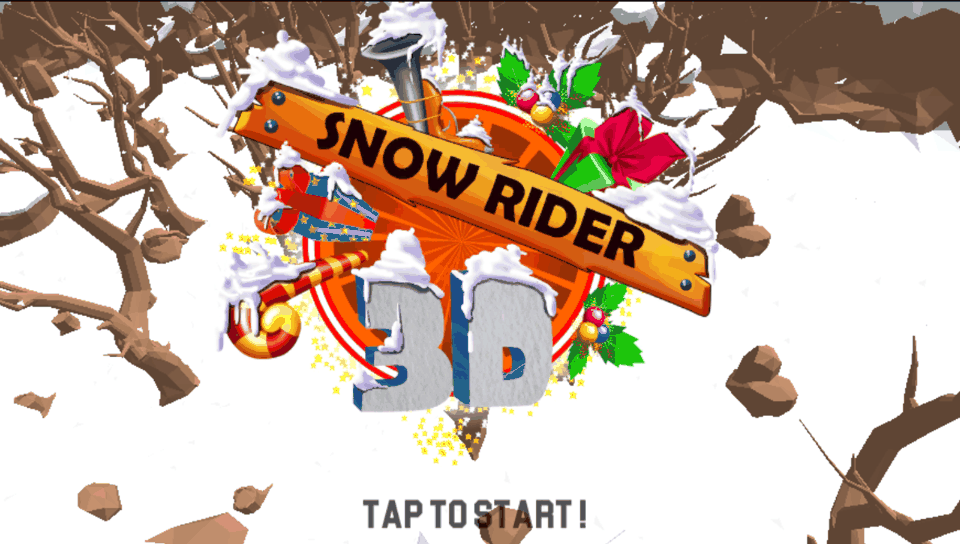
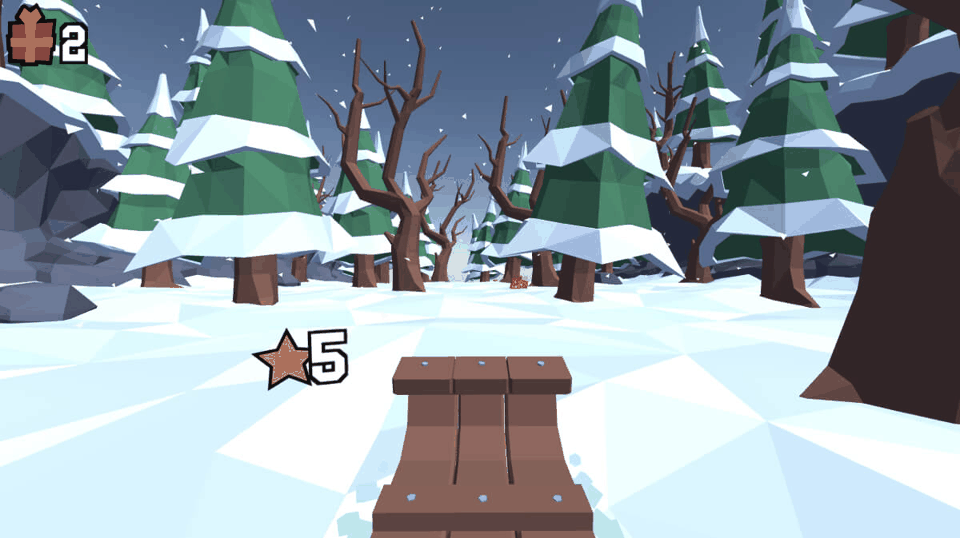
👀 Let the scene become a route map
A busy screen encourages you to name each object: tree, rock, present, snowman. That list can quickly become more work than it helps. Try describing the space instead: a wide left passage, a narrow middle corridor or a landing that opens to the right.
The object still matters—especially when it moves—but your action is usually aimed at empty snow. This shift gives you something concrete to steer toward. Pair it with the steering release habit so you do not pass straight through the chosen opening and into another hazard.
🎁 Do not let a pickup redraw the map too late
Presents are visually inviting because collecting is part of the game. Before taking a detour, check whether the route still has an entrance and an exit. A gift between two objects may be reachable but leave an awkward continuation. The pickup alone does not make that line a good route.
For a learning run, remove that distraction temporarily. Follow passages and crossings without pursuing gifts, then add collecting back once the course is easier to read. The gift guide shows how to make that choice deliberately.