Snow Rider 3D High Score Strategy
Pick one crash you can prevent. If your last few runs ended with a second swerve, make the first move earlier and track whether you still need the correction.
🏆 Choose the job for this attempt
Distance attempt
Choose the line with the clearest continuation. Let a gift go if collecting it adds a sudden turn or an uncertain landing. The success measure is whether your decisions kept the run alive.
Collecting attempt
Take reasonable pickups and accept that the route may be less direct. Still judge the exit after the gift: collecting only helps if you can get back to usable snow.
📋 Keep your comparison fair
| Keep the same | Why it matters |
|---|---|
| Game build and host context | A number may belong to a different scoring system or wrapper. |
| Input method | A keyboard and an improvised touch setup do not create the same control problem. |
| Display setup | A bigger player changes visual scale and your sense of approach. |
| Goal for the run | A gift run and a survival run involve different decisions. |

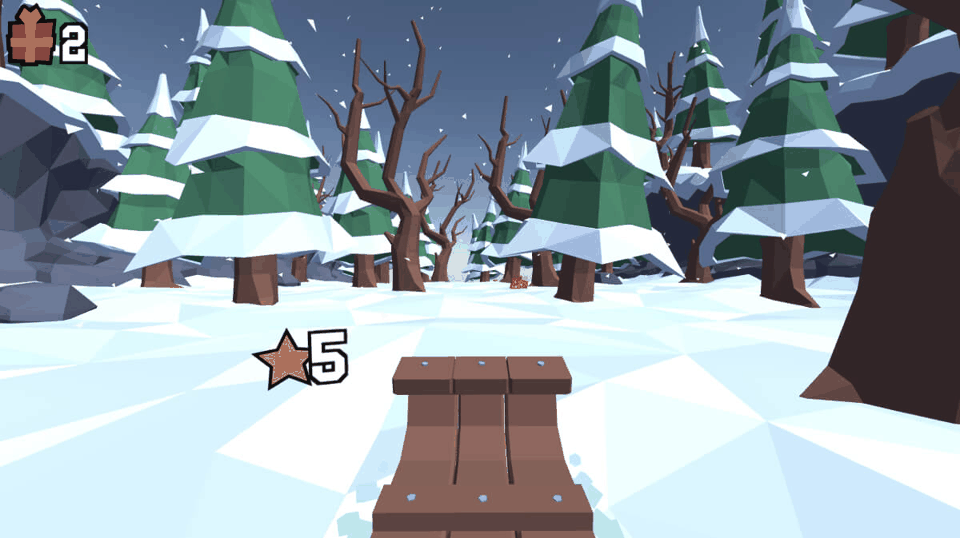
🎯 Judge the middle attempts too
Your very best run can hide a lot of inconsistency. Look at several ordinary attempts and ask how they ended. If most finish after a gift detour, the score plan is easy to improve: make collecting less important for the next set. If they end on landings, work on one landing cue instead.
You do not need an official leaderboard to make that useful. Note the displayed score yourself and keep the method consistent. Do not invent a conversion to metres or seconds unless your game labels the counter that way. For public record claims, use the evidence checklist.
🧠 A repeatable score routine
Start without rushing
Click back into the player and make sure the controls respond before you commit to a serious run. A lost-focus start is not a useful test of skill.
Look one decision beyond the nearest hazard
An opening is better when it leaves another opening available. Give the next landing and exit as much attention as the present obstacle.
Reduce optional risk as the run matters more
A detour that is fine during collecting practice may not belong in a personal-best attempt. Let the goal decide, rather than the present’s bright colour.
Stop changing everything after a crash
Pick one cause you can act on. Keep the rest of your approach stable long enough to tell whether the change helped.