Before the run
Choose a specific habit: “I will release the key as soon as I reach a clear gap.” Keep collecting and score chasing in the background for this attempt.
Try releasing the direction key as soon as the sled points through the opening. If you still have to tap the opposite key, make the original press shorter on the next clear stretch.
Choose an opening with a visible way out.
Use enough steering to reach the line, without treating the edge as a destination.
Let the new position settle before making another decision.
It is easy to stare at the nearest obstacle until it feels urgent. Then you hold a direction, pass the opening and steer back just as the next obstacle arrives. The trouble began before the dramatic part: the first decision was late and the first input lasted too long.
Try a quieter correction earlier. You are not aiming for a perfectly straight sled path. You are trying to arrive at a usable position with enough attention left to read the next opening. If you keep needing immediate rescue moves, shorten the first turn before speeding up your reactions.
Use it to practise releasing the key. There is no bonus for shaving an obstacle when the middle of the passage is available. An extra margin makes the next visual check easier.
Look at their relationship. Passing on the outside of the first may put you on the wrong side of the second. Choose a route through the pair rather than winning each turn separately.
Keep the recovery small if space permits. Steering all the way to the opposite side can replace one danger with a longer commitment. A modest line change may be enough to reopen the route.
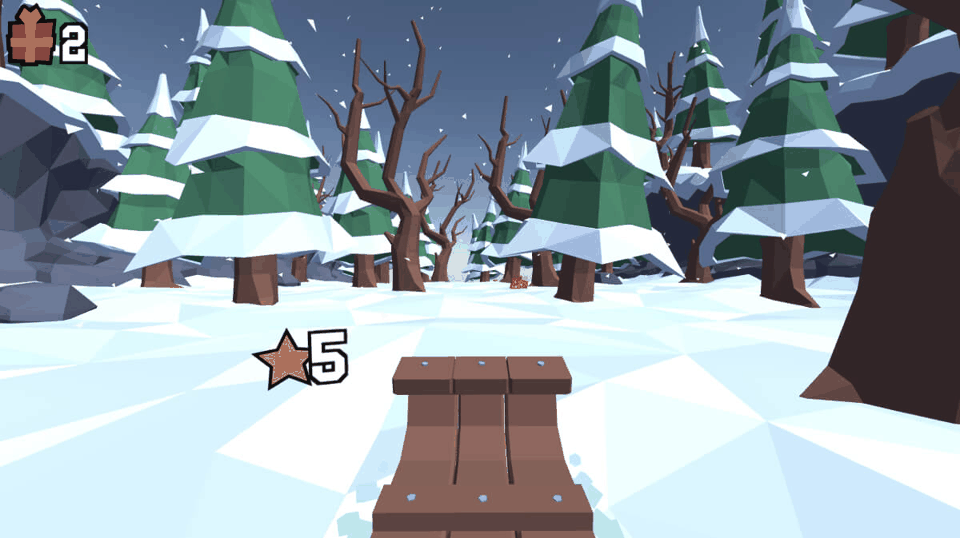
Choose a specific habit: “I will release the key as soon as I reach a clear gap.” Keep collecting and score chasing in the background for this attempt.
Notice whether you still drift past the opening. If you do, start the adjustment earlier rather than adding a harder reversal.
Describe the first turn that went wrong. Was the target poorly chosen, the press too long or the release followed by a needless correction?
A group of trees creates a corridor. Snowmen and rocks can narrow its entrance or exit. Read the usable corridor instead of counting the objects. The tree guide focuses on this kind of spacing, while route planning connects several corridors into a longer decision.
Avoid assigning yourself a rule such as “always stay in the middle.” A central position can leave options, but the clearest route sometimes sits elsewhere. Keep your position responsive to the terrain you can actually see.
| Observed movement | Adjustment to test |
|---|---|
| You arrive beyond the opening | Release the original press sooner instead of adding a harder reversal. |
| You never reach the intended passage | Begin the move earlier while the approach is still readable. |
| You steer back immediately after every turn | Check whether the first target or its exit was chosen too late. |