Single tree
Choose the side with the better continuation. Passing the easier side now is less useful if it points you directly into the next object.
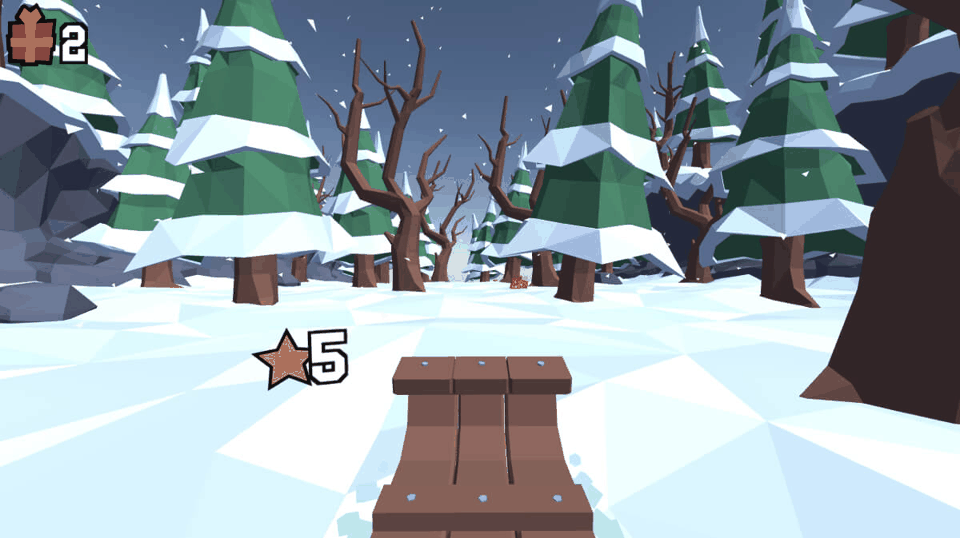
Pick the gap between trunks at snow level. A gap that looks wide between branches can pinch at the ground, especially when another trunk stands just beyond the first pair.
The snow-covered canopy is the most noticeable part of a tree, but the lower shape helps you judge where the route is blocked. Avoid aiming at the last visible sliver beside a trunk. What looks like a generous opening at a distance can feel much tighter when it reaches the sled.
Give yourself margin instead of trying to discover the smallest possible clearance. A fan guide cannot promise the exact collision boundary of every tree model. The safe habit is to choose the clear part of the passage, not to test the model’s outline during a serious run.
Choose the side with the better continuation. Passing the easier side now is less useful if it points you directly into the next object.
Inspect both ends of the opening between them. If the corridor narrows or hides its exit, compare an outside route before committing.
Read the group’s overall boundary. Repeated tiny corrections through uncertain gaps can cost more attention than one earlier move toward a broad passage.
During a practice run, look for an opening that is clearly wider than the minimum you could squeeze through.
Watch the empty snow between the objects and release steering once you are aligned.
Before you reach the trees, check where the passage places you next. Do not wait for the trunks to leave the screen.
| Pickup position | Useful question |
|---|---|
| Already on your line | Can you collect it without changing the approach? |
| Near one trunk | Would taking it remove the safety margin around the object? |
| Beyond a narrow opening | Is the far side visible before you enter? |
| Requires turning back | Would leaving it preserve a cleaner route through the cluster? |