How to Play Snow Rider 3D
Start a run and make one short turn on clear snow. Once you know how far the sled moves with a tap, aim for a wide opening and let the next gift pass if it pulls you off course.
🎮 From the page to the slope
Open the game
Return to the homepage player, press Play and wait for the game’s own start screen. There can be a second start button inside the player. Loading the frame and beginning a run are separate actions.
Give the game the keyboard
Click inside the player, then try a brief left or right input. If the webpage scrolls or nothing responds, fix focus before assuming that the game is broken.
Choose a visible opening
Watch the area farther up the course. Aim for a clear passage rather than staring at the sled itself. Make an early adjustment, release the direction and see where that leaves you.
Finish with one useful observation
When a run ends, name what happened: a late turn, a gift detour or a landing with no exit. That is enough feedback for a better next attempt. You do not need to diagnose everything at once.
🛷 What you control—and what you do not
Your choices
You choose the sled’s position across the slope and when to jump. These decisions work together: a jump begins from your current line, so takeoff cannot rescue an approach you have not lined up.
Use the keyboard reference for bindings. Start with the arrow keys shown in the player guide, then check the loaded game’s instructions before relying on alternatives.
The downhill flow
Forward travel is automatic. Treat the moving scenery as a stream of decisions, not a road you can stop on while choosing. Your planning happens before an obstacle gets close.
A run ends when you hit a hazard or fail to stay on a usable part of the course. The point of another attempt is to make a better decision earlier, not to force the previous route at all costs.
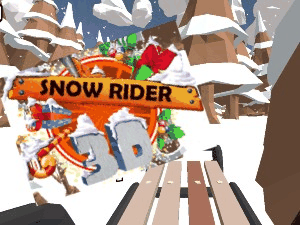
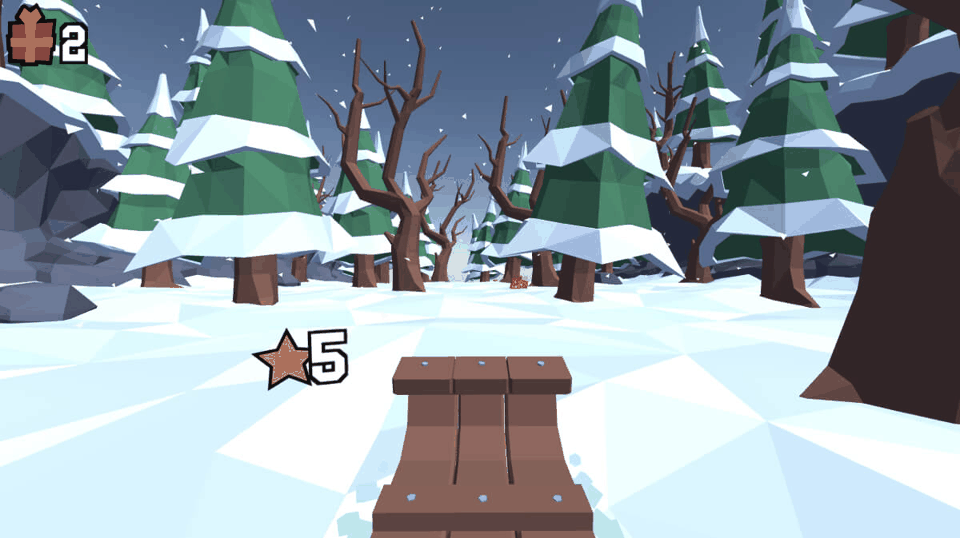
🎁 Add collecting after you can steer
A gift in an open lane is a useful pickup. A gift that pulls you toward a tree or across the whole slope is a different proposition. For the first few runs, collect only the presents already close to your chosen route. This keeps the learning task small.
The collecting goal and the distance goal can compete. Decide which one matters for the attempt before starting. The gift decision guide develops that tradeoff without assuming every pickup is worth the risk.
🔎 A quick end-of-run check
| What ended the run? | Try next time |
|---|---|
| An obstacle you noticed too late | Look farther up the course and identify an opening before moving. |
| A hard swerve past the opening | Release the direction earlier and use a smaller correction. |
| A crash just after a jump | Inspect the landing route before pressing jump. |
| A present followed by a collision | Skip the detour and compare how the same kind of situation feels. |