Snow Rider 3D Snowballs Guide
Watch a snowball long enough to see which way it is crossing the course. If it is rolling into your intended opening, take the wider line while you can still reach it.
🔄 Position is only the first observation
A stationary opening can be judged mainly by its width. An opening beside a moving ball also has a direction of change: it may be widening or narrowing. Glancing once at the ball and immediately committing ignores that second piece of information.
Observe its movement relative to nearby trees or the edge of a passage. The comparison helps you see whether the ball is moving toward your intended line. Do not assume it will keep exactly the same apparent speed or that a gap visible now will still be comfortable when you arrive.
🧭 Keep the route adjustable
Notice the ball’s direction against the surrounding scene.
Prefer usable space beyond the narrowest apparent gap.
Avoid using all your steering room on the first correction.
Recheck the opening as you get closer.
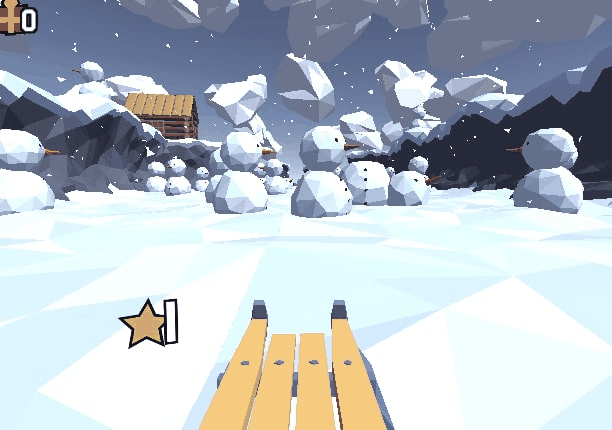
👀 A moving-hazard practice run
Remove the collecting distraction
Ignore presents near moving hazards for one attempt. Pay attention to whether your chosen opening grows or shrinks as you approach. The goal is to read change, not to pass at minimum clearance.
Review the commitment point
After a crash, ask when you committed to the line. If the opening was already narrowing, the decision began too late. If the line was good but an input overshot it, work on steering release instead.