THE DOWNHILL PLAYGROUNDBROWSER PLAY · NO SITE ACCOUNT
Terrain · Snow Rider Field Guide
Rocks and Barriers in Snow Rider 3D
A low barrier can hide what comes next. Before jumping it, look for a way around and check whether the snow on the far side is clear enough for the sled.
🪨 A clearance check in two directions
Across the slope
Read how much width the obstacle actually blocks. A rock with an irregular outline or a barrier stretching sideways can occupy more of the route than the most noticeable part suggests.
Down the slope
Look beyond the obstacle. A low shape can conceal another object until you are close. A route that passes its edge should also have room to continue once the hidden area becomes visible.
🧱 Why low does not automatically mean jump
The useful question is not simply whether an obstacle looks short. It is whether the loaded game lets you clear that particular approach and whether the landing is worth choosing. A clean side route removes the uncertainty of a jump and can leave more control for the next decision.
Do not assume a visible decoration has the same collision boundary as its picture. Leave comfortable spacing and use ordinary practice attempts to learn the game’s response. A personal-best run is a poor time to test the smallest margin beside a rock.
Rocks are visible in the start scene. Use the actual run to judge their spacing, surrounding obstacles and the part of the route they may hide.
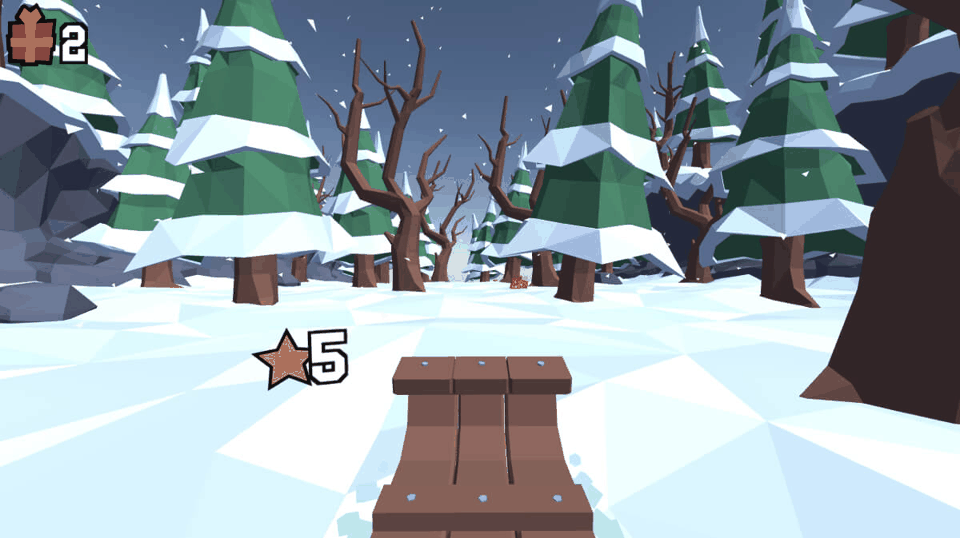
The rock faces narrow the corridor from both sides. Judge the remaining snow at sled level before moving toward the edge.
🔎 Use the outline, then the exit
A visual checklist for rocks and barrier-like objects in the course.
Visual cue
Route question
A shape spread wide across the snow
Is there a broad passage on either side?
An irregular rock outline
Are you leaving room around the base, not just its highest point?
An object beside another hazard
Do they form a combined barrier or a usable corridor?
A low obstacle with a hidden far side
Can another approach reveal the landing sooner?
🛷 A clean approach beats a late correction
Set the line while there is still room to change your mind. If you are planning to pass a barrier on the left, check whether that side has an exit before holding the key. Release when the passage is reached rather than steering until the object disappears.
If the route requires a jump, connect it to the landing-first method. That method is deliberately cautious about hidden space: clearing the near obstacle is only one part of the movement. The next patch of snow decides whether the choice actually worked.
🎯 Review the first hidden problem
Identify what ended the run
Was it the rock or barrier itself, an object behind it or a missed landing?
Identify what you could see
Distinguish a bad spacing judgement from a route whose continuation was never visible.
Change the earlier choice
Give the obstacle more width or choose an approach that reveals the exit sooner. Test one adjustment at a time.