Crossing Gaps in Snow Rider 3D
Line the sled up with the far side before the gap fills your view. If the crossing points straight at another hazard, move to a cleaner line before you take off.
🪂 Inspect the far side first
Find a landing area rather than focusing only on the empty space.
Move onto the line while there is still room to release steering.
Use the current view and the jump behaviour you have practised.
Prepare the next route once the landing is visible.
👀 Avoid an angled guess
An approach that is still drifting sideways can make the landing harder to judge. Line up before takeoff when the course allows it. The jump decision should confirm a chosen route rather than become an attempt to escape a position you no longer understand.
There is no fixed universal takeoff mark to memorise from this page. Display size, perspective and build differences can all change what an approach looks like. Use repeatable visual cues in your own player and judge the result by where the sled lands.
📋 Diagnose the miss accurately
| What happened | Question to review |
|---|---|
| You never reached usable ground | Was the takeoff too early or the chosen crossing too uncertain? |
| You reached the far side but hit an object | Did you inspect the landing and its exit before jumping? |
| You crossed while still moving sideways | Could the approach have been aligned earlier? |
| A key press appeared to do nothing | Was the game focused and running, or is this an input problem? |
🧊 What a safer crossing looks like
Readable before commitment
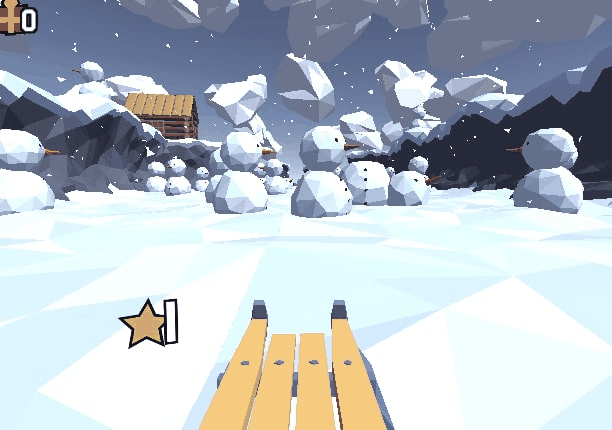
You can identify the landing patch and at least one continuation. You are not relying on a hidden area turning out to be clear.
Room after the landing
You have enough usable space to read the next obstacle instead of needing an immediate hard reversal. The landing is part of the route, not its endpoint.
🎯 A useful crossing drill
For one attempt, skip gifts near crossings and make each jump a deliberate choice. Name the landing side in your head before takeoff. If the run ends there, record whether the problem was the approach, the timing or the exit. Do not put all three under “bad jump.”
Once that distinction is clear, use the jump-timing guide for the movement itself and route planning for the passage around it. If the input is missing altogether, the keyboard checklist is the right next step.