Snow Rider 3D Route Planning
Look for two connected patches of snow. The first gets you past the nearest object. The second tells you whether that choice leaves room to handle the next row.
🧭 Compare exits, not just entrances
| Candidate route | Entrance | Exit | Decision |
|---|---|---|---|
| A narrow shortcut | Looks open now | The next obstacle hides the continuation | Treat it as uncertain; look for a clearer line. |
| A wider side passage | Needs an early adjustment | Leaves visible snow and another escape direction | Often worth choosing before the nearest obstacle gets close. |
| A present-centred line | Collects a gift | Requires a sharp turn immediately afterward | Useful only if the collecting goal justifies the added risk. |
🌲 Plan in pairs
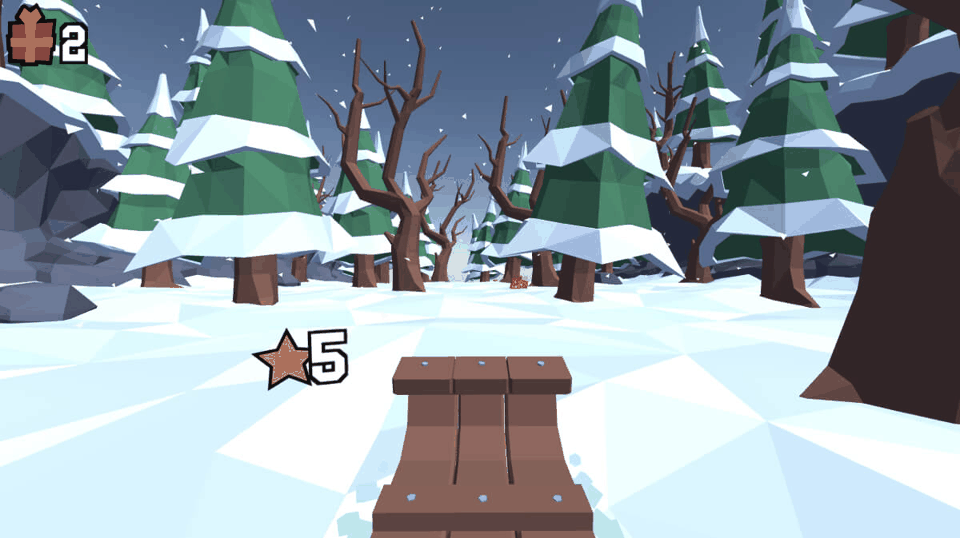
Read the first obstacle and the one beyond it as a pair. If they sit on opposite sides, a route that swings far around the first can make the second harder. Look for a position that makes both manageable, even if it is less direct at the first obstacle.
This does not mean memorising an entire course. You only need enough forward information to avoid moving into a trap. The moment an opening is no longer clear, update the plan. A route is a working choice, not a promise you must honour after the picture changes.
🎁 A gift should fit the route
Treat a present as a waypoint you may choose, not a destination that cancels the rest of the course. Check the approach, the pickup and the exit as one short path. If the pickup is the only part that looks safe, the path is incomplete.
The gift guide has a more detailed risk check. For a survival attempt, a clean exit usually deserves more weight than a single optional pickup. For a collecting attempt, you can accept a less direct line while still avoiding blind commitments.
🗺️ The opening–exit–reserve check
Where can the sled pass right now?
Where does that passage place it next?
What adjustment would still be available?