Play Run 3 Unblocked
Before jumping a wide hole, look for an intact side wall. Moving onto it can turn that wall into the floor and give you a continuous route past the break.
Press Play to load · Keyboard recommended
The game loads when you press Play. Loading help ↗
🚀 Learn the tunnel before the long jump
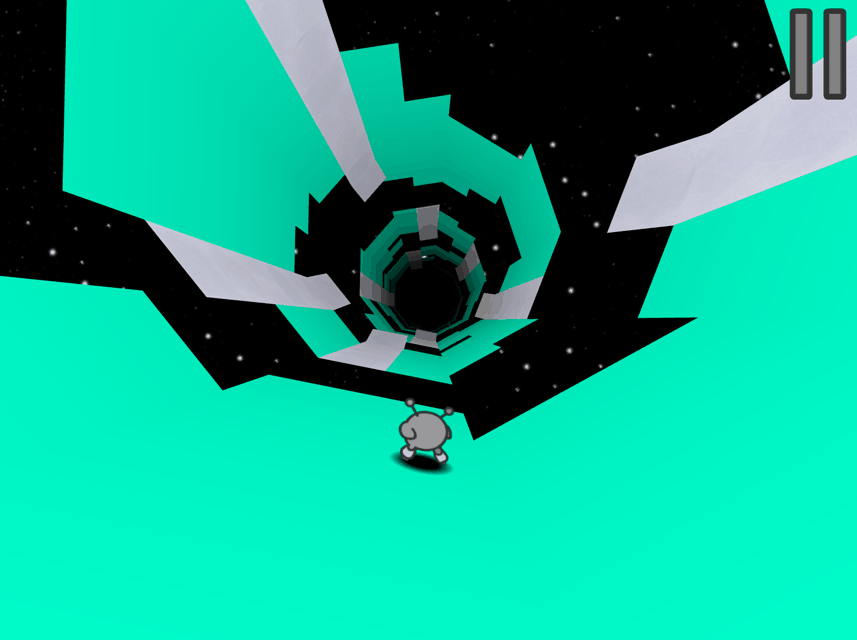
Forward running is automatic. You move sideways and jump, but the defining route choice is whether to keep the current surface or move onto a wall. When the tunnel rotates, a former wall can become the floor beneath the runner.
That changes how to read a gap. Instead of asking only “can I jump this?”, inspect the neighbouring surface. A route around a hole can be more manageable than a demanding leap over it. Give the next landing a surface you can actually continue along.
⌨️ Run 3 controls
| Input | Action | How to begin |
|---|---|---|
| ← / → | Move sideways | Use the input to prepare a landing or reach another surface. |
| ↑ or Space | Jump | Try a short press, then learn the held-jump behaviour in your build. |
| Run onto a wall | Change the usable surface as the tunnel rotates | Inspect where the new floor leads before committing. |
🗺️ Explore and Infinite ask different questions
Explore play
Use the structured tunnel route to learn a section. When you repeat a difficult part, change one approach choice rather than treating each failure as a fresh mystery.
Infinite play
Use the continuing run to practise adaptable route reading. Focus on a reliable movement habit rather than expecting a memorised section to solve every arrangement.
🧱 Plan for the surface after landing
A landing is useful only if the tiles ahead give you another move. Look past the first safe patch and identify the next stretch of usable surface. A tiny island can be a valid landing, but it asks for another decision sooner than a broad strip does.
Some surfaces can change or collapse, depending on the section and build. Learn what a tile does from the game, then include that behaviour in the route. Do not assume every visually reachable patch will remain equally comfortable to stand on.
🎯 A route-switching exercise
Choose a readable section
Use a low-pressure part of the game rather than a new personal-best attempt.
Inspect a neighbouring surface
Before a gap reaches you, find an alternative path on the side of the tunnel.
Commit early enough to read the rotation
After the surface changes, locate the next landing instead of continuing to steer automatically.
Review the route, not only the jump
If you fall, ask whether the surface choice or the takeoff created the problem.
🛷 The useful difference from sledding
Snow Rider asks you to keep a line through a snowy scene. Run 3 adds a choice about which surface makes that line possible. Both reward looking ahead, but a successful key rhythm from one game is not a route plan for the other.
The character options in Run 3 can also change how a movement feels. Learn the active character before making a score comparison; avoid assuming a different runner is only a cosmetic sled-like swap. Use the game comparison if you want a simpler steering challenge next.
📸 Broken tiles in Run 3